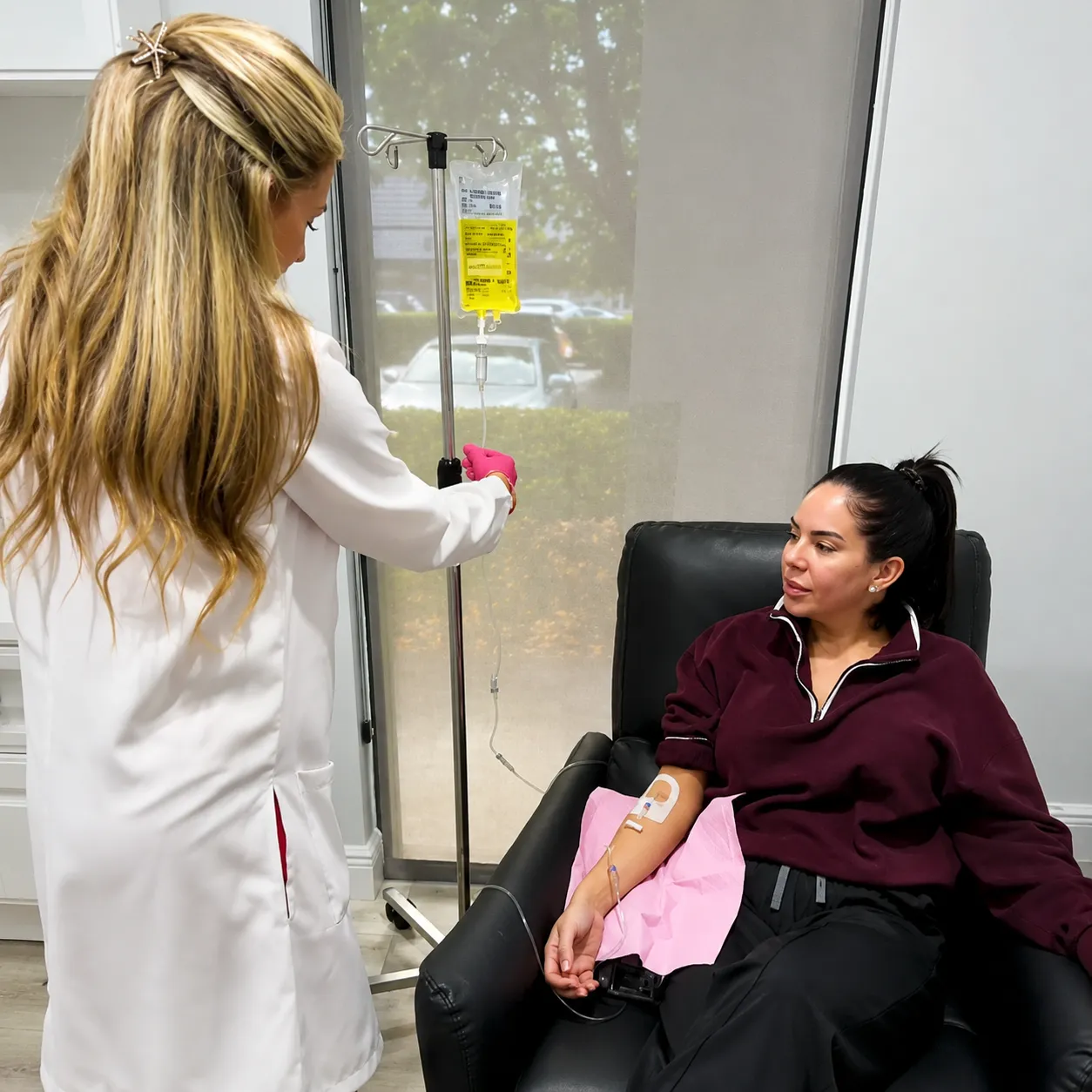
Consultation time
Often ~30–45 minutes

Weight Loss · Medical weight management support
Start a more personalized approach to weight management with support designed around your goals, habits, and health picture. NP-led weight-loss guidance in Doral focused on sustainable progress—not crash plans or empty promises.
Better structure, clearer accountability, and a plan that helps you move forward with confidence—step by step.

Consultation time
Often ~30–45 minutes
Downtime
None
Timeline
Varies by plan and consistency
Approach
Lifestyle-first, medically guided
Best for
Structured, realistic weight management
Follow-up
Based on your progress plan
A strong weight-management plan is usually built around nutrition, activity, sleep, stress, and follow-up support; some patients may also discuss medication options when medically appropriate.
How weight loss support works here
Healthy weight management usually involves more than simply “eating less.” National guidance commonly points to a mix of nutrition changes, physical activity, sleep, stress management, and long-term habit support.
For some people, treatment may also include additional tools such as structured programs or prescription therapies when medically appropriate. The right plan depends on your health picture, your goals, and what you can realistically sustain.
We focus on progress you can live with: better routines, more clarity, and a plan that supports consistency instead of extremes.
Your weight-loss consultation
We start by understanding your goals, past attempts, eating patterns, activity level, sleep, schedule, and the obstacles that make progress hard to maintain on your own.
From there, we build a more personalized direction—one that respects your lifestyle while giving you more structure, accountability, and clarity on what to work on next.

Weight-loss goals
Turn general intentions into a plan with more direction, follow-through, and measurable next steps.
Build habits you can repeat, rather than relying on short bursts of motivation that are hard to maintain.
Have your plan reviewed through a clinical lens, especially when past efforts have stalled or felt confusing.
Shape the plan around your schedule, preferences, barriers, and real-world routine—not a generic template.
Regular check-ins can help you adjust sooner, stay engaged, and recover more effectively from setbacks.
Focus on progress that is more likely to last instead of dramatic promises that often backfire.
Is weight-loss support right for you?
A structured weight-management plan can help many people, but the safest starting point depends on your health picture.
Your weight-loss visit
Four steps—goal review, personalized planning, progress tracking, and next-step adjustments.
We talk through your goals, your history, your habits, and what has or has not worked for you in the past.
Your first steps are shaped around your routine, food patterns, activity level, and the barriers you are realistically working with.
We monitor what is changing, where you are getting stuck, and what needs to be adjusted so progress stays practical.
Weight management is rarely linear, so the plan evolves with your response, your schedule, and your real-life challenges.
What to expect over time
Weight management usually works best when progress is viewed over time instead of judged week to week. Ups and downs can happen, especially while routines are changing.
The goal is not to be perfect. It is to build a plan you can continue, adjust, and return to when life gets busy or motivation dips.
If something in the plan is not working, that is information—not failure. We adjust and keep moving.


Weight Loss FAQ
Short answers here—your consultation covers goals, strategy, and fit in more detail.
Medical weight loss is a supervised approach to weight management that may include nutrition guidance, activity planning, behavior support, progress tracking, and, when appropriate, medical treatment options. The goal is not quick fixes—it is safe, sustainable progress.
Yes. A strong weight-loss plan should reflect your goals, history, lifestyle, and how your body responds over time. We focus on realistic support rather than one-size-fits-all instructions.
Not always. Weight management often starts with lifestyle changes and ongoing support. In some cases, prescription treatment may be considered when medically appropriate, but it is not the only path.
There is no honest fixed timeline. Progress varies based on your starting point, consistency, sleep, nutrition, activity, stress, and whether medical therapy is part of your plan. We focus on steady, sustainable change rather than unrealistic promises.
A visit may include a review of your goals, health history, habits, progress, obstacles, and next-step planning. The exact structure depends on whether you are starting, checking in, or adjusting an existing plan.
Yes. Many people benefit from structure, accountability, and a more personalized plan after trying on their own. Setbacks are common, and they do not mean you failed—they often mean the strategy needs adjustment.
People with certain medical conditions, medications, pregnancy, eating-disorder history, concerning symptoms, or other health considerations may need more evaluation before beginning a structured weight-loss plan.
Continue exploring
Weight-management support focuses on long-term health habits and clinical guidance, while IV therapy and aesthetic services can complement broader wellness and confidence goals when each step truly fits your needs.



The Diane Exclusive setting
Provider, setting, and personalized care—the same standards we bring to every wellness-focused consultation.


Book weight-loss support in Doral
Meet us in Doral for a personalized consultation and discover a more structured approach to weight management—one built around your lifestyle, your goals, and your long-term progress.
Fastest: WhatsApp · Prefer voice? Call during business hours.
3901 N.W. 79th Ave # 122 - Doral, FL 33166 · Directions
Weight-loss support should be individualized and may not be appropriate in the same way for every guest. This page is educational, not medical advice. Treatment options, including whether medication is appropriate, depend on your health history, goals, and clinical evaluation.